Read Your Mind
Welcome to the CogniFit Science page where you’ll discover a wealth of information and new insights about ways to improve our brain fitness.
CogniFit Brain Fitness Programs, Explained by the Expert

For a more complete explanation of the science of cognitive training and the history of our brain fitness programs, read Cognitive Training: The Key to Cognitive Vitality, written by CogniFit founder Professor Shlomo Breznitz. Written in clear and understandable language, this fascinating booklet explains the new breakthroughs and discoveries that made CogniFit brain fitness programs possible.
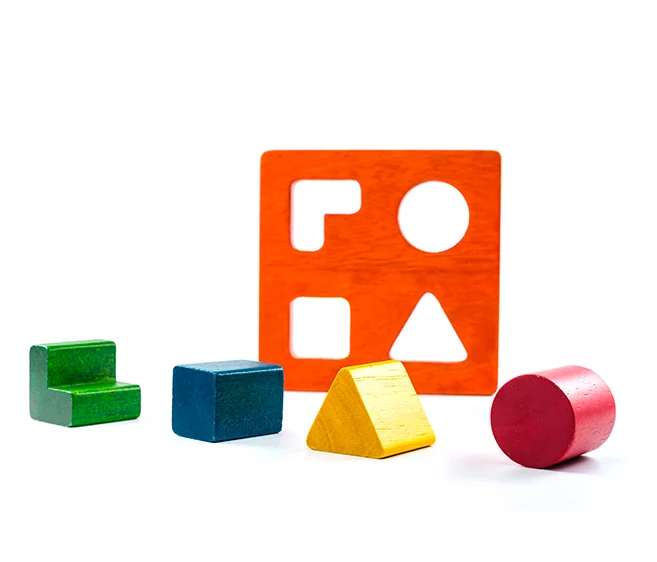
Cognitive Task Example

Training Divided Attention
Divided attention is the cognitive ability that allows you to perform two or more tasks at the same time. A good example is when you’re driving a car and having a conversation with a person next to you.
Top 10 Things Your Brain Should Know About Itself
- Some experts estimate the average person loses about 9000 brain cells a day.
- Your brain consists of approximately100 billion cells and weighs about 3 pounds.
- While you're awake, your brain generates about 25 watts of power. That’s enough to illuminate a light bulb, so you should be grateful that’s not happening while you’re asleep.
- Your brain is a power hog. Although it makes up only 2% of your body's weight, it uses 20% of your body's energy.
- The right side of your brain controls the left side of your body, and the left side of your brain controls the right side of your body.
- About 750ml of blood pumps through your brain every minute.
- The human brain is about 75% water.
- Think fast! Information travels through the brain as fast as 268 miles per hour.
- Every time you yawn you’re sending a wake-up call to the brain. The extra air you inhale when yawning goes into your lungs, which send that extra oxygen to the blood and then to the brain, giving it a little jolt of alertness.
- A study where several nuns were asked to write autobiographical essays when they were 20 and then tested when they were 80, showed better cognitive ability and less evidence of Alzheimer’s among those whose early essays contained more complex ideas and stories. The lesson? The earlier you begin exercising your brain, the longer you’ll retain your brain fitness.
What it Takes
Life is complicated. In the course of a single day, you perform thousands of simple physical tasks that require millions of complex mental calculations. Here are some examples of how you use many combinations of 14 cognitive abilities in your daily life:
14 Key Cognitive Abilities
Use Cognitive Science to Recover Your Health
Recent developments and discoveries in the area of neuroscience have shown that regular brain fitness training can provide considerable benefits to people of all ages who have experienced cognitive decline due to disease, trauma or chemotherapy. Read about how people with Alzheimer’s, ADHD, MS, Parkinson’s and chemo fog can use CogniFit brain fitness programs to recover, improve and maintain their cognitive health.
The subsequent brain damage ultimately results in long-term disability. Because the disease can cause multiple sites of damage throughout the central nervous system, patients will experience a wide variety of symptoms. One of most common is impairment of cognitive ability.
Cognitive impairment, including impaired memory, attention, processing and executive functions, affects up to 65% of patients who have MS. Short-term memory, which is the ability to recall information that has been acquired only a brief time before it must be retrieved, is most often affected.
Alzheimer’s Disease (AD) is the best-known and most common form of dementia, which is a disease of the nervous system that’s characterized by loss of certain mental abilities. It usually develops during old age and it’s marked by a decline in mental functions such as memory, reasoning, and the ability to plan. A person with AD usually experiences a gradual decline in mental functions. The first stages include a slight loss of memory, such as the inability to remember the names of people or objects.
Parkinson's Disease (PD) is characterized primarily by the affect it has on motor functions; its symptoms include trembling, stiffness of limbs, slowness of movement and general postural instability. The disease usually affects people over the age of 50. Early symptoms of PD are subtle and occur gradually, but as they become more pronounced, patients may have difficulty walking, talking or completing other simple tasks. In some people the disease progresses more quickly than in others.
It is well known fact that people who receive chemotherapy for cancer have a higher risk of developing cognitive impairment in later life than those who have never undergone chemotherapy. Patients who have been treated with higher doses of chemotherapy have a higher risk than those treated with standard doses. The duration of chemotherapy can also significantly affect cognitive impairment: the longer the treatments, the more it tends to affect cognition.
Attention Deficit Hyperactivity Disorder (ADHD) is one of the most common mental disorders that develop in children. Children with ADHD experience impaired functioning at home, at school, and in relationships with their peers. If untreated, the disorder can produce long-term adverse effects, extending into adolescence and adulthood, in as many as 50 percent of children diagnosed with ADHD.
When dyslexic college students trained with CogniFit Personal Coach®, their brain activity, working memory and reading performance were shown to increase significantly, and results lasted up to six months after training.
The Truth about Age and Cognitive Decline
As we age, we all experience some degree of cognitive decline. Unfortunately, it’s a normal part of the aging process. Some areas of the brain are affected earlier than other, and the good new is that some don’t decline at all. And the best news of all is that a program of regular brain training can prevent and even reverse most types of age-related cognitive decline.
Most people are aware of the phrase 'use it or lose it' as it is applied to physical fitness.
As recently as 50 years ago, sleeping was considered a passive part of our daily lives. Thanks to extensive research, we now know that your brain remains active while you’re sleeping, and that getting enough sleep is extremely beneficial to your physical and mental health.
Brain fitness is a term that’s becoming familiar to more and more people. That’s because the more that scientists learn about the brain, the more we realize how important it is to keep our brains, as well as our bodies, in good shape. And when it comes to how your brain is affected by aging, there is good news and bad news.
The brain fitness industry is a fast growing business. New brain teasers appear each day, on the web and on mobile phones. They offer to improve your memory, attention, or other cognitive skills, all for free. They may be fun to do, but how many of them really work? Read the list of the important differences between serious brain training programs and the brain games and teasers you fine everywhere these days.