CogniFit

CogniFit Training: The Key To Cognitive Vitality

What is cognitive vitality?

In order to effectively interact with the world around us, our brains have to continuously process large amounts of complex information. We need to select the information most important and relevant to us at any given time, properly attend to it, perceive its message and store it in memory for long enough to act on it.

In the absence of well developed capacity for attention, perception, and memory, a person walks through life as a moonwalker oblivious to his/her circumstances. These most basic cognitive skills do not come easy, and the brain has to invest in learning how best to perform them from the very first day of life.

What sights, sounds, and smells are more important than others and must not be missed? What type of touch and taste are more central to survival and well being? How to make sense of complex visual patterns and build an internal database of familiar people and places? How not to be distracted by less important and less meaningful stimuli, even if they glitter and tempt our attention? How to disregard the highly predictable and the repetitive around us? And, perhaps most critical of all, how to safeguard important information from oblivion for future use?

In short, how to best store in memory our impressions, experiences, and discoveries, and thus build our own private version of the world in which we live?

Throughout our life-span, our ability to deal with the many challenges we face, is to a large extent a function of our cognitive vitality. Consider, for example, the paramount importance of language skills. As we try to communicate an idea, any idea, even while talking, our brains run ahead of us searching for the most appropriate words to use. Those of us, who have built a rich and often utilized lexicon, or developed well-practiced search skills, would be far more effective. Good long-term memory for faces, names, and events, is yet another example of a highly advantageous cognitive skill.

Can we prevent cognitive decline?

For many years the accepted wisdom was that everything that grows must eventually shrink, and things that develop would inevitably decline. Consequently, so went the argument, cognitive loss is a necessary by-product of normal aging, and there is not much that we can do about it.

Indeed, initial studies comparing groups of people from different age groups, tended to corroborate this notion. It was only with the publication of the important prospective studies, following the same individuals over many years, that the true picture started to emerge.

While there is a clear slowing down in cognitive processing in older people, this is not of a magnitude that has functional implications. In other words, as we grow older things take longer than before, but the delay does not lead to quality decline as well.

One would have to look at some specialized activities that are extremely speed sensitive, such as being a fighter pilot, in order to translate this slowing down process to a meaningful loss of function. Safe driving of a car is clearly an important issue in its own right.

There are very significant individual differences in the amount of cognitive loss between different people. While some show major loss, there are others that have very little or no loss at all. The areas of particular interest to the person tend to be protected from loss.

Given these findings, the obvious intriguing question became who were the individuals that maintained their cognitive vitality well into advanced age? Was this yet another case of hereditary pre-determination, or was there something that they did during their lifetime that made a difference?

As we grow older things take longer than before, but the delay does not lead to quality decline as well.

One factor, whose major role in predicting cognitive vitality that has been systematically found in many different studies, is years of formal education. Thus, people with higher education have much smaller age-related cognitive decline. This cognitive resilience of those who have some years of college or university cannot, however, be attributed to the actual experiences of the studies themselves.

There is little in those three-four years that can account for the huge benefits more than forty years later. It is much more realistic to assume that on the average, those with higher education were employed in jobs which were mentally more challenging.

Consequently, for the entire duration of their work-life their brains were necessarily more active. Current studies of the role of work complexity on cognitive vitality support this interpretation.

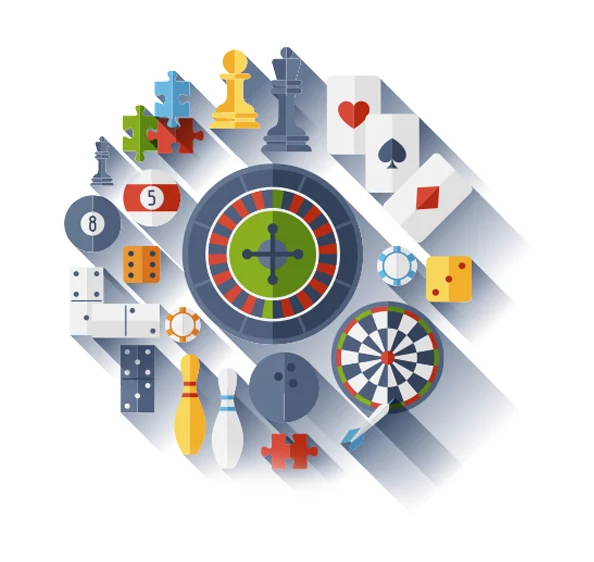
Investigation of the lifestyle of people who maintain their cognitive vitality well into advanced age throws yet additional light on what might be the key protective factors. Hobbies such as chess, bridge, and crossword puzzles, are well represented in this group. So are lifelong habits of reading books, playing a musical instrument, and generally leading a life of active mental involvement. The more passive ways of spending leisure time, such as watching TV, tend to be risk factors rather than protective ones.

Cognitively challenging activity can protect against Alzheimer's disease

It is hard to marshal a more persuasive argument than protection against Alzheimer's disease. While the precise cause for its onset, and certainly ways to cure or prevent it, are still far from understood, the evidence for the beneficial effects of cognitively challenging activities is well established.

Statistically, the risk of people with higher education is about one third of the general population. This enormous difference in risk surpasses by far the genetic factor as it is understood at this time.

Furthermore, individuals practicing the various above mentioned cognitively challenging hobbies are at lower risk. It seems that the same factors that protect us from the deleterious effects of age- related cognitive decline also protect us from the debilitating effects of dementia. The underlying principle behind all these factors is the benefit of cognitive effort.

CogniFit © 2012

Please type your email address


Sign Up successfully

Your Cognifit account has been created. We've sent the instructions to your email. Please check your anti-spam inbox. If you don't receive the email within a minute or two, try Re-sending the instructions or contact us via emial at support@cognifit.com