





Predominantly inattentive (ADD)
Significant attention problems without hyperactivity.
- Easily distracted by other activities or by sounds
- Missing details at work or in conversation
- Careless mistakes in boring or difficult tasks
Sign up on here if you don't have your mobile handy
You are going to create a patient management account. This account is designed to give your patients access to CogniFit evaluations and training.
You are going to create a research account. This account is specially designed to help researchers with their studies in the cognitive areas.
You are going to create a student management account. This account is designed to give your students access to CogniFit evaluations and training.
You are going to create a family account. This account is designed to give your family members access to CogniFit evaluations and training.
You are going to create a company management account. This account is designed to give your employees access to CogniFit evaluations and training.
You're setting up your trainer account. With it, you’ll be able to invite your group and guide them through CogniFit evaluations and training activities.
For personal use
I'm a health professional
For my family
I'm an educator
I'm a researcher
Employee Wellbeing
Developers
I’m a coach or sports professional
For users 16 years and older. Children under 16 can use CogniFit with a parent on one of the family platforms.
By clicking Sign Up or using CogniFit, you are indicating that you have read, understood, and agree to CogniFit's Terms & Conditions and Privacy Policy.
Scan the below QR with your phone to register through our mobile app for the ultimate convenience and access on-the-go!
If you don't have your mobile handy sign up on here
Download our app to enjoy a good experience on this device


If you don't have your mobile handy sign up on here


“The CAB Pro is the best cognitive assessment that can be administered online.”
Designed for psychologists and clinical professionals.
No credit card required. Cancel anytime.
Your data is protected and never shared.
By creating an account, you agree to CogniFit’s Terms & Conditions and Privacy Policy.
Do you already have a CogniFit account? Log in

“As a psychometrician with a strong background in test design, the tipping point for me was the reliability and validity studies, especially the graphs showing equivalence with the old-school tests. That gives universities, colleges and other doctors confidence in the results.”
Designed for researchers and academic institutions.
No credit card required. Cancel anytime.
Your data is protected and never shared.
By creating an account, you agree to CogniFit’s Terms & Conditions and Privacy Policy.
Do you already have a CogniFit account? Log in

“I have a tech background… it's a very flexible, agile platform… and there's a technical manual and support for professionals.”
Designed for developers and technology partners.
No credit card required. Cancel anytime.
Your data is protected and never shared.
By creating an account, you agree to CogniFit’s Terms & Conditions and Privacy Policy.
Do you already have a CogniFit account? Log in
A short questionnaire based on DSM-5 criteria and a battery of online cognitive tasks, in about 20-30 minutes. It measures attention and related cognitive skills; it does not diagnose.
Choose your platform
Wondering about yourself? Only a qualified professional can diagnose ADHD: talk to a psychologist or a doctor, who can use this test with you.
A complementary tool for professionals. CogniFit does not offer a medical diagnosis of ADHD. It does not diagnose.

Example CAB-ADHD report
Illustrative example with fictitious results · PDF
Download the example reportSource: CogniFit, Cognitive Assessment for ADHD (CAB-ADHD), adult version.
In adults, ADHD (attention-deficit/hyperactivity disorder) shows as attention and concentration problems, hyperactivity or impulsiveness, and is associated with academic, professional and social difficulties: distraction, short attention span, restlessness, emotional instability and impulsive behaviour.
Many adults have lived with these difficulties all their lives without ever being diagnosed. They may have an average or above-average IQ, yet have been labelled disruptive or poor students because of the extra difficulties they faced at school.
An ADHD test for adults such as CogniFit's CAB-ADHD combines a questionnaire with a battery of neuropsychological tasks to evaluate symptoms and cognitive functions related to ADHD. It gives a risk index (low, moderate or high) that takes the person's cognitive strengths and weaknesses into account, and indicates the predominant presentation. That is information for the professional's evaluation, not a diagnosis.
Diagnosing ADHD requires a multidisciplinary assessment, with an exhaustive differential diagnosis to rule out symptoms better explained by a mood disorder, a learning disorder or another condition.
Add an objective cognitive measure to your adult ADHD evaluations.
Signs are grouped into three presentations. They are described here to help you recognise them, never to score them.
Significant attention problems without hyperactivity.
Difficulty controlling behaviour, thoughts and emotions.
Signs of both presentations in the same person.
Recognising some of these signs does not mean a person has ADHD: only an evaluation by a qualified professional can diagnose it. If you recognise them in yourself, talk to a psychologist, psychiatrist or physician about a full evaluation.
Give each adult you see a structured picture of symptoms and cognition.
Online tasks evaluate the main neuropsychological factors associated with ADHD, especially executive functions, with scales and tasks appropriate for each user. These are the seven real tasks.
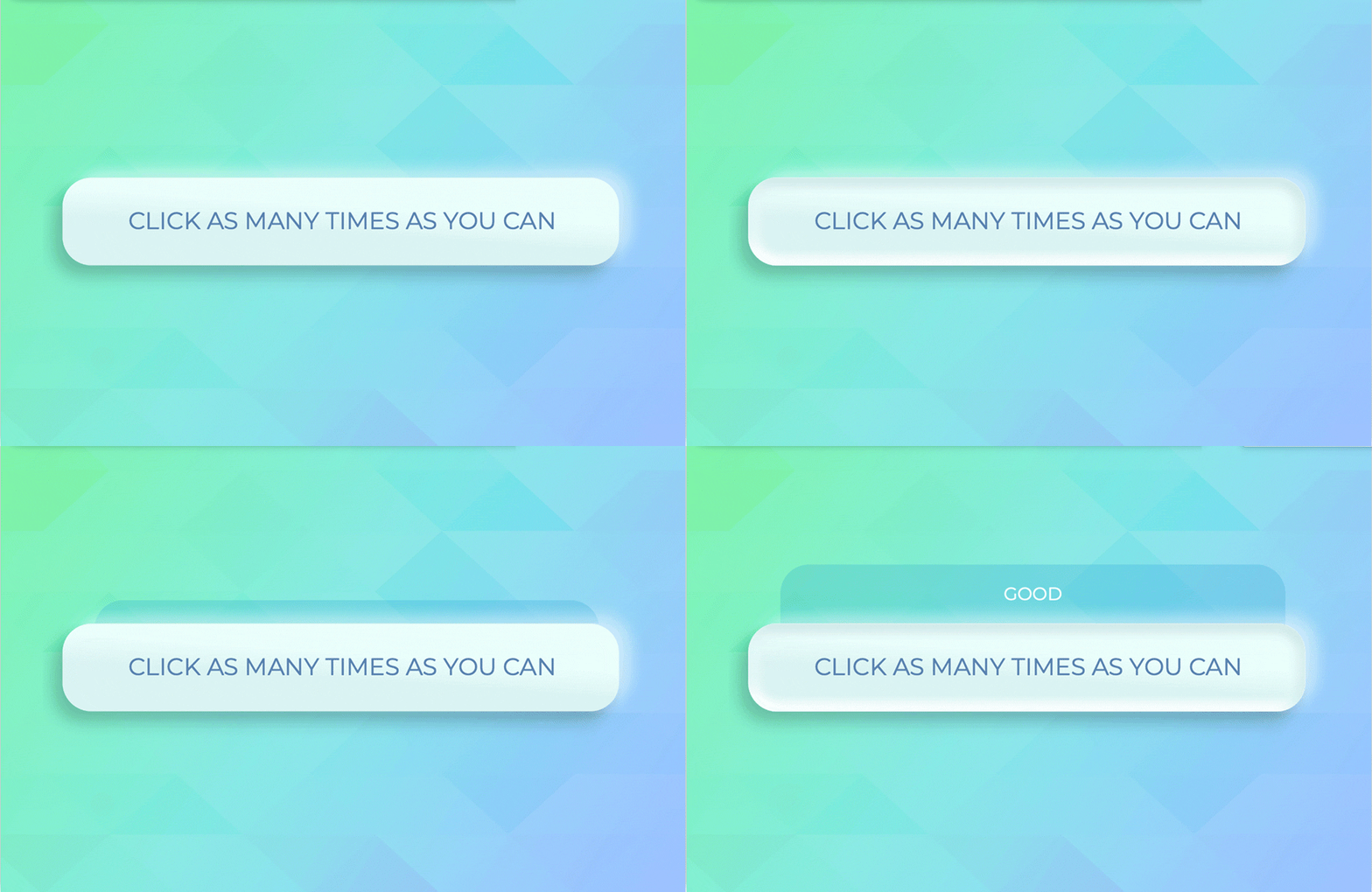


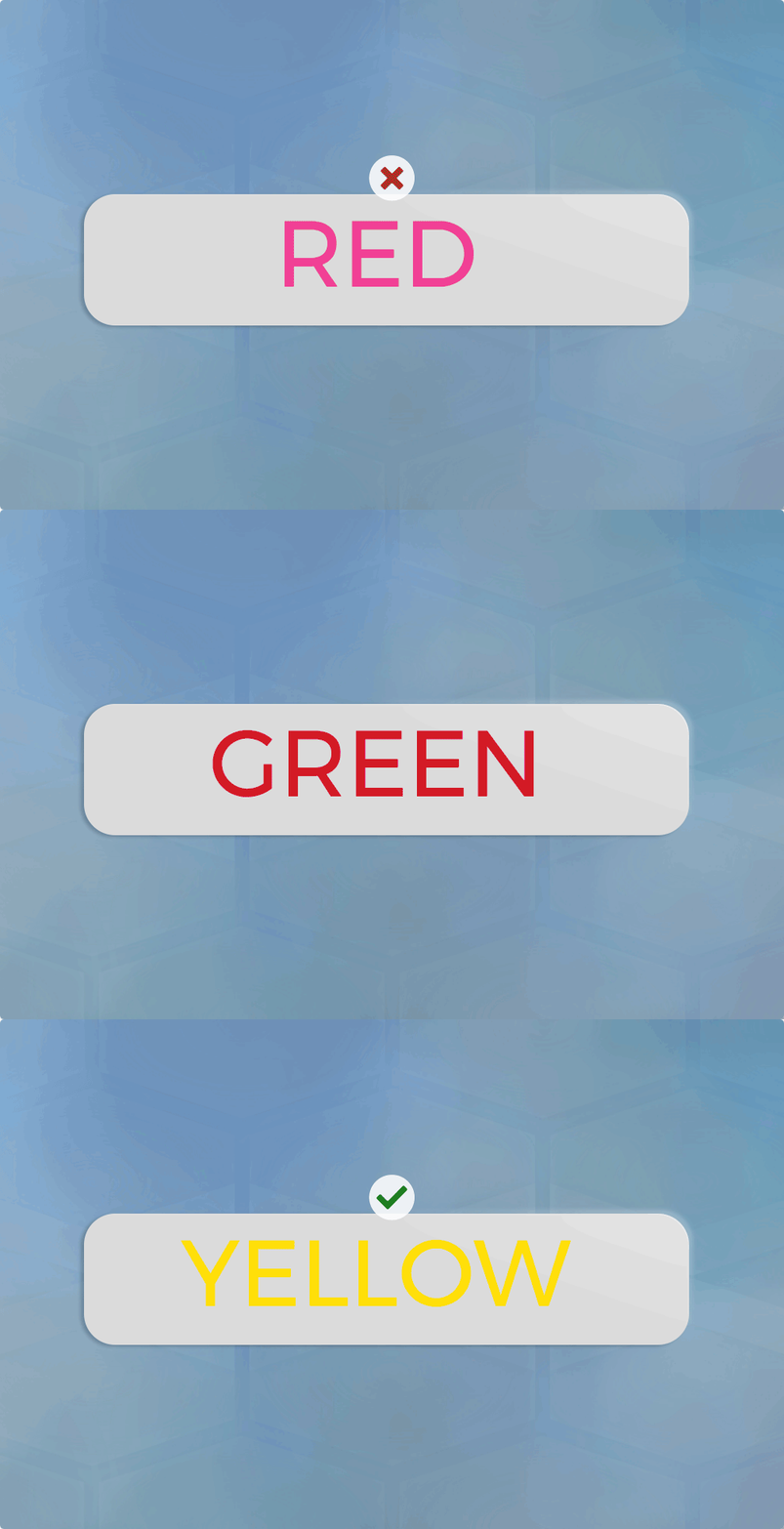


Focusing on a target stimulus regardless of how long it lasts. People with ADHD often have trouble attending to the relevant stimuli of a situation, such as one voice in a busy office.
Tasks ask for quick responses to targets while ignoring other stimuli.
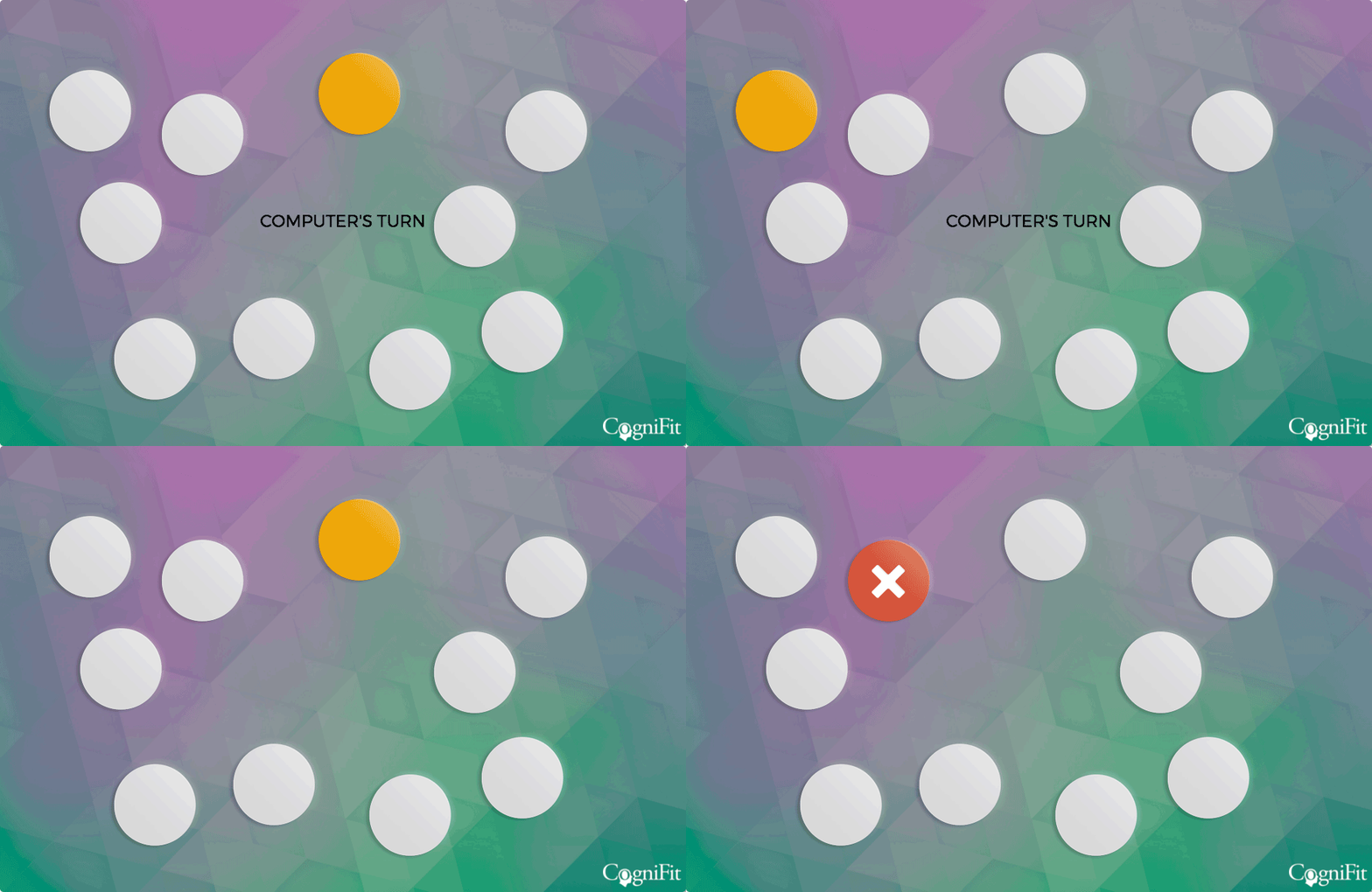
Retaining a small amount of visual information (letters, figures, colours) for a short time. It has been reported as a sensitive measure of cognitive deficits in ADHD.1
A sequence of lit circles is reproduced, then again after a 4-second delay.
Acting with the hands according to what the eyes see, from typing to driving. Motor hyperactivity with poor movement control can reduce it.4
A moving ball is tracked precisely along its path.
Organising the best way to reach a future goal, like a project at work. It is often altered in ADHD, making it harder to foresee the consequences of one's actions.
Reported in the cognitive profile built from the task battery.
A general profile of these skills may indicate the presentation of ADHD and its severity, as information for the professional's evaluation.
One online session of about 20-30 minutes, on a computer, tablet or phone, then a report ready to download.
On the platform for clinicians, researchers or API partners.
Simple questions adapted to the main DSM-5 diagnostic criteria and symptoms of ADHD in adults: hyperactivity and impulsiveness, inattention, academic history, and difficulties in professional or social areas. Completed by you or by the person.
Seven online neuropsychological tasks. The whole test takes adults about 20-30 minutes.
Available to download as soon as the test is completed.
You review the results within your clinical evaluation and share the recommendations and plan of action with the person.
Reading: low risk index; symptoms by area within the range of no apparent risk; no cognitive weaknesses detected.
Next step: specific recommendations and a personalised plan of action, in a PDF report to share.
Send your first CAB-ADHD assessment and read the report yourself.
Each platform has its own account and gives you the same adult CAB-ADHD: questionnaire, task battery and report.

Psychologists, neuropsychologists, psychiatrists and other health professionals use it with adult patients alongside history and interview.

For studies that need to measure the cognitive abilities of adult participants with tasks based on established neuropsychological tests.

For companies that integrate CogniFit's assessment into their product, so their users can take the adult test online.
Is it for you? Ask your psychologist or doctor to give you this test.
Built on established neuropsychological tasks, with a published reliability analysis and clear limits on what a result means.
The battery draws on the NEPSY, the Corsi block-tapping test, the Boston Naming Test, the WAIS-III vocabulary test, the Stroop test, the Vienna Test System and continuous performance paradigms, focusing on the executive functions associated with ADHD.2 3
Read the reliability analysis (PDF, English)A complementary tool for professionals. CogniFit does not offer a medical diagnosis of ADHD.
Short answers for professionals, and for adults wondering about themselves.
No. The CAB-ADHD is a complementary tool for professionals, and CogniFit does not offer a medical diagnosis of ADHD. Diagnosis requires a multidisciplinary assessment by a qualified professional, with an exhaustive differential diagnosis.
Adults take about 20-30 minutes to complete the CAB-ADHD, questionnaire and tasks included. It runs online on a computer, tablet or phone.
The CAB-ADHD measures ADHD-related symptoms through a questionnaire and cognitive skills through seven neuropsychological tasks: focused attention, short-term visual memory, hand-eye coordination and planning, among the executive functions associated with ADHD.
The questionnaire can be completed by the professional in charge of the assessment or by the person themselves. Its questions are adapted to the main DSM-5 diagnostic criteria and simplified to be understood by almost anyone.
The report includes a risk index for ADHD (low, moderate, high), the predominant presentation, warning signs, a cognitive profile, an analysis of the results, and recommendations and guidelines. It is organised in three parts: symptoms, cognitive risks and conclusions.
Talk to a qualified professional such as a psychologist, psychiatrist or physician. Only they can diagnose ADHD, and they may use a tool like the CAB-ADHD as one part of a full evaluation.
The CAB-ADHD is available for children 7 and older, teens and adults. This page describes the adult version.
Yes. CogniFit publishes the reliability analysis of the assessment, in English: CogniFit reliability analysis for researchers (PDF).
Create the account for your work and use the adult CAB-ADHD within your own evaluation.
Once the person completes the test, the results are ready as a downloadable report.
CogniFit App
Brain Science
Research
Brain Games
Tools
* Every CogniFit cognitive assessment is intended as an aid for assessing cognitive wellbeing of an individual. In a clinical setting, the CogniFit results (when interpreted by a qualified healthcare provider), may be used as an aid in determining whether further cognitive evaluation is needed. CogniFit’s brain trainings are designed to promote/encourage the general state of cognitive health. CogniFit does not offer any medical diagnosis or treatment of any medical disease or condition. CogniFit products may also be used for research purposes for any range of cognitive related assessments. If used for research purposes, all use of the product must be in compliance with appropriate human subjects' procedures as they exist within the researchers' institution and will be the researcher's obligation. All such human subject protections shall be under the provisions of all applicable sections of the Code of Federal Regulations.
 United States