






Choose your platform and buy
Try if one month free of charge with 10 licenses.
What is the account for?
Welcome to CogniFit! Welcome to CogniFit Research! CogniFit Healthcare Boost Your Business with CogniFit! CogniFit Employee Wellbeing Distribute CogniFit to Businesses Empower your team

Sign up on here if you don't have your mobile handy

You are going to create a patient management account. This account is designed to give your patients access to CogniFit evaluations and training.

You are going to create a research account. This account is specially designed to help researchers with their studies in the cognitive areas.

You are going to create a student management account. This account is designed to give your students access to CogniFit evaluations and training.

You are going to create a family account. This account is designed to give your family members access to CogniFit evaluations and training.

You are going to create a company management account. This account is designed to give your employees access to CogniFit evaluations and training.

You're setting up your trainer account. With it, you’ll be able to invite your group and guide them through CogniFit evaluations and training activities.

You are going to create a personal account. This type of account is specially designed to help you evaluate and train your cognitive skills.

You are going to create a patient management account. This account is designed to give your patients access to CogniFit evaluations and training.

You are going to create a family account. This account is designed to give your family members access to CogniFit evaluations and training.

You are going to create a research account. This account is specially designed to help researchers with their studies in the cognitive areas.

You are going to create a student management account. This account is designed to give your students access to CogniFit evaluations and training.

You are going to create a company management account. This account is designed to give your employees access to CogniFit evaluations and training.

You are going to create a developer account. This account is designed to integrate CogniFit’s products within your company.

You're setting up your trainer account. With it, you’ll be able to invite your group and guide them through CogniFit evaluations and training activities.

loading

For users 16 years and older. Children under 16 can use CogniFit with a parent on one of the family platforms.

By clicking Sign Up or using CogniFit, you are indicating that you have read, understood, and agree to CogniFit's Terms & Conditions and Privacy Policy.

Scan the below QR with your phone to register through our mobile app for the ultimate convenience and access on-the-go!

Enhance Your Experience!

If you don't have your mobile handy sign up on here

Download our app to enjoy a good experience on this device

If you don't have your mobile handy sign up on here

What it feels like

Attention

“I have read this line three times.”

Your cognitive profile

Measured
  • Attention328/800
  • Memory504/800
  • Coordination416/800
  • Perception608/800
  • Reasoning552/800

Example · scores 0–800, compared with people your age and gender

Brain fog: why your mind feels cloudy, and how to clear it

Brain fog is the everyday name for trouble concentrating, memory lapses, slower thinking and difficulty finding words. It is not a diagnosis: it often shows up with long COVID, menopause, stress or poor sleep, and the skills behind it can be measured.

  • Every figure sourced 10 studies, linked
  • CogniFit research own long COVID study
  • Any device computer, tablet or phone

Is brain fog serious, and will it go away?

Brain fog is a description of symptoms, not a disease, and in many people it comes and goes with sleep, stress, hormones or illness.

It deserves a doctor's attention when it lasts more than a few weeks, keeps getting worse or gets in the way of daily life. Because it describes symptoms rather than a disease, the useful questions are what is behind it in your case, and which cognitive skills it affects.

When to see a doctor →
  • Not a diagnosis

    An everyday name for confusion, memory lapses, poor concentration, slower thinking and trouble finding words.2

  • 22%

    of people had cognitive impairment 12 weeks or more after COVID-19, across 81 studies.3

  • Often temporary

    In midlife women, the usual practice gains in processing speed and verbal memory paused during perimenopause and returned after menopause.5

  • 5 skills

    behind it can be measured objectively online and compared with people of your age and gender.

Not sure which skills are affected? Measure them instead of guessing.

Brain fog symptoms: what it feels like day to day

Brain fog shows up in ordinary moments. Pick the one that sounds like you to see the cognitive skill behind it and how it is measured.

The skill behind it

Attention

“I have read this line three times.”

Attention keeps your focus on one thing and filters out the rest. When it slips, concentrating takes real effort.

Example score328/800
below the middle of the group, people of the same age and gender
The skill behind it

Memory

“I walked into the kitchen and forgot why.”

Memory holds what you just meant to do and helps you find the words you need, so short-term lapses and lost words both show up here.

Example score504/800
above the middle of the group, people of the same age and gender
The skill behind it

Coordination

“Everything takes me longer than it used to.”

Coordination and speed set how quickly you take in information and respond. Slower thinking feels like tasks that drag.

Example score416/800
around the middle of the group, people of the same age and gender
The skill behind it

Perception

“Busy places leave me feeling confused.”

Perception makes sense of what you see and hear. When it is overloaded, a crowded scene is harder to take in.

Example score608/800
above the middle of the group, people of the same age and gender
The skill behind it

Reasoning

“Planning a simple day feels like a puzzle.”

Reasoning and executive functions plan, switch between tasks and solve problems. When they tire, everyday decisions feel heavier.

Example score552/800
above the middle of the group, people of the same age and gender

Brain fog causes: why it happens

Brain fog has several possible contributors, and more than one can be at work at once. These are the ones the research behind this guide supports, and the skills each one tends to hit.

After COVID-19 (long COVID)

One of the most studied causes of brain fog.

22%cognitive impairment
32%fatigue

In a meta-analysis of 81 studies, about 22% of people had cognitive impairment 12 weeks or more after a COVID-19 diagnosis, and about 32% had fatigue.3

A Global Burden of Disease analysis estimated that 6.2% of people with symptomatic COVID-19 in 2020–2021 had at least one long COVID symptom cluster, and 2.2% had the cognitive one.4

In CogniFit’s long COVID study, all five skills started below average1AttentionMemoryCoordinationPerceptionReasoning

Stress and anxiety

Yes, they can make thinking feel foggy.

Anxiety takes up attentional resources, which makes it harder to keep your focus and to shift between tasks, as attentional control theory describes.7

Tends to hitAttentionReasoning

Not enough sleep

Short sleep hits attention hardest.

A meta-analysis of short-term sleep deprivation found the largest effects on simple attention and vigilance, and smaller effects on more complex tasks.6

Tends to hitAttention

Perimenopause and menopause

Often a temporary dip.

In the SWAN study of midlife women, the usual improvement with practice in processing speed and verbal memory disappeared during perimenopause and returned after menopause.5

Tends to hitMemorySpeed

Depression

It affects thinking, not only mood.

A systematic review and meta-analysis found deficits in executive function, memory and attention in depression, and some of them can persist after mood improves.8

Tends to hitReasoningMemoryAttention

Cancer and its treatment

“Chemo brain” is a recognized change.

Cognitive changes during and after cancer treatment are recognized enough that an international task force published common methods to study them.9

If your fog started with cancer treatment, there is an assessment made for it. See how to take it

When to see a doctor about brain fog

A doctor can check common, treatable contributors and review your medication.

Talk to a doctor if the fog

  • lasts more than a few weeks
  • keeps getting worse
  • gets in the way of work or daily life
  • comes with other symptoms

Seek urgent care for

  • sudden confusion
  • trouble speaking or understanding
  • weakness or numbness on one side of the body
  • fog after a head injury

Brain fog or dementia?

People often worry that one is the other. They are different things.

QuestionBrain fogDementia
What it isAn everyday description of symptoms, not a diagnosisA medical condition
How it behavesUsually fluctuates with sleep, stress, hormones or illnessProgressive
Who notices itUsually the person themselvesA doctor, who makes the diagnosis

Any persistent or worsening memory problem should be checked by a professional.

An objective result can help you decide whether to talk to a professional.

About 30–40 minutes online Compared with your age and gender A man sits on a sofa at home, concentrating on a task on his tablet.

Brain fog test: measure it, don't guess

No test can diagnose brain fog, because it is not a diagnosis. What can be measured objectively are the skills behind it.

CogniFit's General Cognitive Assessment measures them and compares your scores with people of the same age and gender.

  • About 30–40 minutes online, in a computer browser or the CogniFit app for iPhone, iPad and Android.
  • A short wellbeing questionnaire, then a battery of cognitive tasks presented as games.
  • Attention and concentration, memory, perception, reasoning and executive functions, and coordination.
  • A report with your cognitive profile, your strengths and your weaknesses.
  • It does not diagnose any disease or condition. Its results can help you decide whether to talk to a professional.

Example result: a cognitive profile

  • Attention328
  • Memory504
  • Coordination416
  • Perception608
  • Reasoning552
Example for illustration, not a real person's data. Scores from 0 to 800, based on percentiles against people of the same age and gender; the dashed line marks the middle of that group.

How to read it

Each skill gets a score from 0 to 800. It comes from your percentile against people of your age and gender, so the higher the score, the stronger the result compared with them; the dashed line marks the middle of that group.

The lowest score is where to look first. In this example it is attention, the skill behind “I have read this line three times.”

Personalized training starts from that profile, and a later assessment shows what has changed.

Try a free skill check right here

Short tasks that open full screen on this page, no account needed. Each one checks a single skill.

Attention

Stroop test

Checks attention and inhibition.

Want the whole picture? A free account measures all five skills, keeps your results and shows how they change over time.

What the research says about training for brain fog

CogniFit's own study comes first, with its limits shown beside its results. Then the wider research on long COVID brain fog.

Duñabeitia, Mera, Baro, Jadad-Garcia and Jadad · International Journal of Environmental Research and Public Health · 2023

Personalized cognitive training at home after COVID-19

73 adults with brain fog at least 3 months after COVID-19 (mean age 46; 66 women) completed 8 weeks of personalized computerized cognitive training at home, in sessions of about 10 minutes. Their skills were measured with CogniFit's assessment before and after.

73adults
8weeks
51sessions on average
435minutes in total

Results

  • Attention45 → 59
  • Memory48 → 66
  • Coordination35 → 53
  • Perception42 → 59
  • Reasoning44 → 55

Average percentile before and after 8 weeks of training. Source: Duñabeitia et al., 2023.1

  • Memory+18points
  • Coordination+18points
  • Perception+17points
  • Attention+14points
  • Reasoning+11points

Average gain in percentile points after 8 weeks. Source: Duñabeitia et al., 2023.1

All five skills improved (p < 0.001), and the more minutes people trained, the larger the gain.1

Limits

  • A feasibility pilot with no control group, so natural recovery and practice effects cannot be ruled out.
  • Mostly women: 66 of the 73 participants.1
  • Brain fog was self-reported by the participants.
  • The authors call for randomized controlled trials to confirm the results.
  • Averages describe the group, not what any one person will see.

Gorenshtein, Liba, Leibovitch, Stern and Stern · Neurological Sciences · 2024

A review of interventions for long COVID brain fog

17 studies and 806 patients. Interventions fell into rehabilitation (including computerized cognitive training), non-invasive brain stimulation, hyperbaric oxygen and one compound. The authors could not rank them, because the studies measured different things.

In the included studies, personalized training fared better than one-size-fits-all programs, and rehabilitation was described as the safest option, with its efficacy still uncertain.

See your own starting point before you change anything.

Brain fog treatment: what helps clear it

There is no single treatment for brain fog. These steps are ordered by how well the evidence supports them, and you can start most of them today.

Can you clear brain fog instantly?

No. There is no instant cure and no shortcut that works for everyone. Lasting change comes from these steps, and most of them start today.

  1. Protect your sleep

    Keep regular hours and get enough sleep. Attention is the skill most affected by short sleep.6

    Meta-analysis6
  2. Move regularly

    In adults over 50, exercise programs improved cognitive function.10

    Meta-analysis10
  3. Lower the load

    One task at a time, with notes, reminders and breaks, so your memory is not carrying everything.

    Everyday strategy
  4. Manage stress

    Anxiety takes up attention you need elsewhere,7 so lowering stress is part of clearing the fog.

    Research-based7
  5. Ask your doctor for a review

    A doctor can review your medication and check common, treatable contributors.

    Medical check
  6. Measure, then train

    An objective baseline shows which skills are affected. Personalized cognitive training is a complement to the habits above, never a cure.1

    Pilot study1

Brain fog exercises: games for the same skills

Free CogniFit games that keep attention, memory and reasoning busy, playable here in your browser. They are a light complement to sleep, movement and lower stress, not a treatment for brain fog.

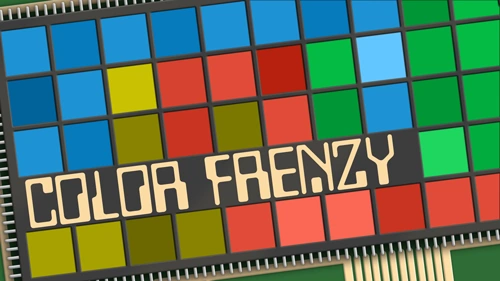
Color Frenzy, a CogniFit game

Color Frenzy

Choose the right square by its color before the time runs out. The goal changes as you play.

  • Attention
  • Perception
Water Lilies, a CogniFit game

Water Lilies

Watch the flowers light up on the pond, then repeat the order, like the classic Simon game.

  • Memory
  • Reasoning
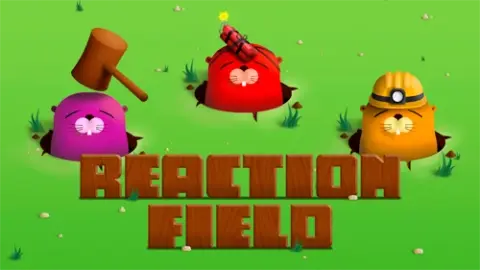
Reaction Field, a CogniFit game

Reaction Field

Tap each mole as it pops up. The speed adapts to the player.

  • Attention
  • Coordination
Sudoku, a CogniFit game

Sudoku

Fill the grid so that every row, column and box holds each number once.

  • Memory
  • Reasoning
Two people sit together at a dining table; one writes a short list on paper while the other listens.

How to help someone with brain fog

Brain fog is real even when nobody else can see it. These are simple ways to support someone close to you.

  • Believe what they describe. Brain fog is a recognized cluster of complaints, not a lack of effort.
  • Share the load: notes, reminders and one task at a time instead of several.
  • Make healthy routines shared ones, like a regular bedtime or a daily walk together.
  • Offer to go with them to the doctor if the fog lasts more than a few weeks or keeps getting worse.
  • Know the urgent signs: sudden confusion, trouble speaking or understanding, weakness or numbness on one side, or fog after a head injury need urgent care.

A free personal account lets each person measure their own skills and follow them over time.

Brain fog: questions people ask

Short, direct answers to what people search most, with the same sources as the rest of this guide.

Still unsure what is behind your fog?

Measure the five skills behind it and compare them with people your age.

CogniFit measures and trains cognitive skills; it does not diagnose, treat or prevent any medical condition, and its results are not medical advice and do not replace professional care.

What does brain fog feel like?

It feels as if your mind is cloudy: you struggle to concentrate, lose words, forget why you walked into a room and think more slowly. The research describes it as confusion, short-term memory lapses, difficulty concentrating, slower thinking and trouble finding words. Each of these moments points to a cognitive skill, such as attention or memory.

What is foggy brain a symptom of?

Brain fog is not a diagnosis in itself; it describes symptoms that can have several contributors. The research behind this guide links it to long COVID, perimenopause and menopause, lack of sleep, stress and anxiety, depression, and cancer treatment. A doctor can check what is behind it in your case.

Is brain fog dangerous, or a sign of dementia?

They are different things. Brain fog usually fluctuates with sleep, stress, hormones or illness, and the person notices it themselves; dementia is a progressive condition diagnosed by a doctor. Any persistent or worsening memory problem should be checked by a professional, and sudden confusion or trouble speaking needs urgent care.

Is brain fog permanent? Can it be cured?

Not necessarily permanent. In a large study of midlife women, the changes seen during perimenopause returned after menopause, which suggests they are often temporary. There is no single cure, because brain fog has different contributors; a doctor can check the treatable ones, and habits such as sleep and exercise support thinking.

How long does brain fog last?

It depends on what is behind it. Fog that comes with poor sleep or a stressful stretch tends to ease as they improve. After COVID-19, 22% of people still had cognitive impairment 12 weeks or more later, across 81 studies.3 In midlife women, the changes seen during perimenopause returned after menopause.5 If it lasts more than a few weeks or keeps getting worse, see a doctor.

How can I clear brain fog instantly?

There is no instant fix. What helps builds over days and weeks: regular sleep, movement, one task at a time and lower stress. If the fog lasts more than a few weeks, see a doctor.

Can stress and anxiety cause brain fog?

Yes. Anxiety takes up attentional resources, which makes it harder to keep your focus and to shift between tasks. Managing stress is one of the steps that can help.

Is there a brain fog test?

No test diagnoses brain fog, because it is not a medical diagnosis. You can measure the skills behind it: CogniFit's General Cognitive Assessment takes about 30–40 minutes online and compares your attention, memory, coordination, perception and reasoning with people of the same age and gender. It does not diagnose any disease or condition.

Do supplements help brain fog?

We do not recommend any supplement. The evidence gathered for this guide does not support one, and the 2024 review of long COVID brain fog treatments could not rank any intervention. If you are considering a supplement, ask your doctor first.

Clear the guesswork in three steps

Measure your skills, then train in a personalized way, at home on a computer, tablet or phone.

  1. 1

    Create your free account

    Sign up and you see your personal space, ready for your first assessment.

  2. 2

    Measure your skills

    Your first assessment is free: about 30–40 minutes of tasks presented as games give you a profile compared with people of your age and gender.

  3. 3

    Train and track

    Personalized training starts from your profile, and new measurements show how it changes over time.

Sources

  1. Duñabeitia JA, Mera F, Baro Ó, Jadad-Garcia T, Jadad AR. Personalized Computerized Training for Cognitive Dysfunction after COVID-19: A Before-and-After Feasibility Pilot Study. Int J Environ Res Public Health. 2023;20(4):3100. https://doi.org/10.3390/ijerph20043100
  2. Gorenshtein A, Liba T, Leibovitch L, Stern S, Stern Y. Intervention modalities for brain fog caused by long-COVID: systematic review of the literature. Neurol Sci. 2024. https://doi.org/10.1007/s10072-024-07566-w
  3. Ceban F, et al. Fatigue and cognitive impairment in Post-COVID-19 Syndrome: A systematic review and meta-analysis. Brain Behav Immun. 2022;101:93-135. https://doi.org/10.1016/j.bbi.2021.12.020
  4. Global Burden of Disease Long COVID Collaborators. Estimated Global Proportions of Individuals With Persistent Fatigue, Cognitive, and Respiratory Symptom Clusters Following Symptomatic COVID-19 in 2020 and 2021. JAMA. 2022;328(16):1604-1615. https://doi.org/10.1001/jama.2022.18931
  5. Greendale GA, et al. Effects of the menopause transition and hormone use on cognitive performance in midlife women. Neurology. 2009;72(21):1850-1857. https://doi.org/10.1212/WNL.0b013e3181a71193
  6. Lim J, Dinges DF. A meta-analysis of the impact of short-term sleep deprivation on cognitive variables. Psychol Bull. 2010;136(3):375-389. https://doi.org/10.1037/a0018883
  7. Eysenck MW, Derakshan N, Santos R, Calvo MG. Anxiety and cognitive performance: Attentional control theory. Emotion. 2007;7(2):336-353. https://doi.org/10.1037/1528-3542.7.2.336
  8. Rock PL, Roiser JP, Riedel WJ, Blackwell AD. Cognitive impairment in depression: a systematic review and meta-analysis. Psychol Med. 2014;44(10):2029-2040. https://doi.org/10.1017/S0033291713002535
  9. Wefel JS, Vardy J, Ahles T, Schagen SB. International Cognition and Cancer Task Force recommendations to harmonise studies of cognitive function in patients with cancer. Lancet Oncol. 2011;12(7):703-708. https://doi.org/10.1016/S1470-2045(10)70294-1
  10. Northey JM, Cherbuin N, Pumpa KL, Smee DJ, Rattray B. Exercise interventions for cognitive function in adults older than 50: a systematic review with meta-analysis. Br J Sports Med. 2018;52(3):154-160. https://doi.org/10.1136/bjsports-2016-096587

Please type your email address