Choose your platform and buy
Try if one month free of charge with 10 licenses.
What is the account for?
Welcome to CogniFit! Welcome to CogniFit Research! CogniFit Healthcare Boost Your Business with CogniFit! CogniFit Employee Wellbeing Distribute CogniFit to Businesses Empower your team

Sign up on here if you don't have your mobile handy

You are going to create a patient management account. This account is designed to give your patients access to CogniFit evaluations and training.

You are going to create a research account. This account is specially designed to help researchers with their studies in the cognitive areas.

You are going to create a student management account. This account is designed to give your students access to CogniFit evaluations and training.

You are going to create a family account. This account is designed to give your family members access to CogniFit evaluations and training.

You are going to create a company management account. This account is designed to give your employees access to CogniFit evaluations and training.

You're setting up your trainer account. With it, you’ll be able to invite your group and guide them through CogniFit evaluations and training activities.

You are going to create a personal account. This type of account is specially designed to help you evaluate and train your cognitive skills.

You are going to create a patient management account. This account is designed to give your patients access to CogniFit evaluations and training.

You are going to create a family account. This account is designed to give your family members access to CogniFit evaluations and training.

You are going to create a research account. This account is specially designed to help researchers with their studies in the cognitive areas.

You are going to create a student management account. This account is designed to give your students access to CogniFit evaluations and training.

You are going to create a company management account. This account is designed to give your employees access to CogniFit evaluations and training.

You are going to create a developer account. This account is designed to integrate CogniFit’s products within your company.

You're setting up your trainer account. With it, you’ll be able to invite your group and guide them through CogniFit evaluations and training activities.

loading

For users 16 years and older. Children under 16 can use CogniFit with a parent on one of the family platforms.

By clicking Sign Up or using CogniFit, you are indicating that you have read, understood, and agree to CogniFit's Terms & Conditions and Privacy Policy.

Scan the below QR with your phone to register through our mobile app for the ultimate convenience and access on-the-go!

Enhance Your Experience!

If you don't have your mobile handy sign up on here

Download our app to enjoy a good experience on this device

If you don't have your mobile handy sign up on here

ADHD test for children:understand their attentionin under 20 minutes

An adult who knows the child answers a short DSM-5–based questionnaire, and the child plays six online attention tasks. The test measures attention; it does not diagnose.

Who is it for?

I'm a professionalClinic, research, school or API

What kind of professional are you?

It's for my childCreate a family account
  • Ages 7 and older and teens
  • About 13–16 minutes
  • Computer, tablet or phone

A complementary tool for professionals. It does not diagnose: a diagnosis of ADHD is made by a qualified health professional through a comprehensive evaluation.

A school psychologist and a father sit with a boy who sorts colored shapes at a table in a sunny school office

Example CAB-ADHD report for children

Illustrative example with fictitious results · PDF

Download the example report
18questions answered by an adult
6online behavioral tasks
13–16minutes, approximately
0–100Global Attention Index

Source: CogniFit, CAB-ADHD for children and teenagers.

What is ADHD in children and teenagers?

ADHD (attention-deficit/hyperactivity disorder) is a neurodevelopmental disorder that appears during childhood and, if it is not properly addressed, can have a strong impact on adolescence and even adulthood.1

In children and teenagers it shows as a clear difficulty paying attention, especially in long tasks, and, when there is hyperactivity, as an excess of activity. It tends to affect the child's or teen's academic and social life.

A proper diagnosis of ADHD is made by a qualified health professional based on a comprehensive evaluation. An ADHD test for children such as the CAB-ADHD adds objective measures of attention and executive functions to that evaluation; it does not replace it.2

Assessing adults? See the CAB-ADHD test for adults.

Add objective measures of attention and executive functions to your evaluation.

Signs of ADHD in children, at school and at home

Professionals and families usually notice the signs in three areas of daily life. They are described here to help you recognize them, not to score them.

Attention

Great difficulty maintaining attention in the classroom and when studying at home. Frequent distractions end up affecting learning.

  • Careless mistakes in schoolwork
  • Difficulty sustaining attention in tasks or play
  • Not seeming to listen when spoken to
  • Being easily distracted

Activity and impulse control

Difficulty inhibiting movement and sitting still, which can disturb classmates and strain relationships.

  • Fidgeting or squirming
  • Leaving their seat when expected to stay seated
  • Blurting out answers
  • Difficulty waiting their turn, interrupting others

Organization

Children and teenagers with ADHD also tend to be more disorganized, at school and in daily routines.

  • Trouble organizing tasks
  • Not finishing schoolwork
  • Losing school materials
  • Forgetfulness in daily activities

These signs alone do not mean a child has ADHD: only a qualified health professional can diagnose it, through a comprehensive evaluation. If you recognize them in your child, talk to their pediatrician or another qualified health professional.

Turn what parents and teachers describe into data you can compare with a normative dataset.

Six tasks measure the attention and executive skills involved

Each task gives a percentile score from 0 to 100: the child's performance relative to a normative dataset. Together they quantify attentional and executive function difficulties often related with ADHD. These are the real tasks.

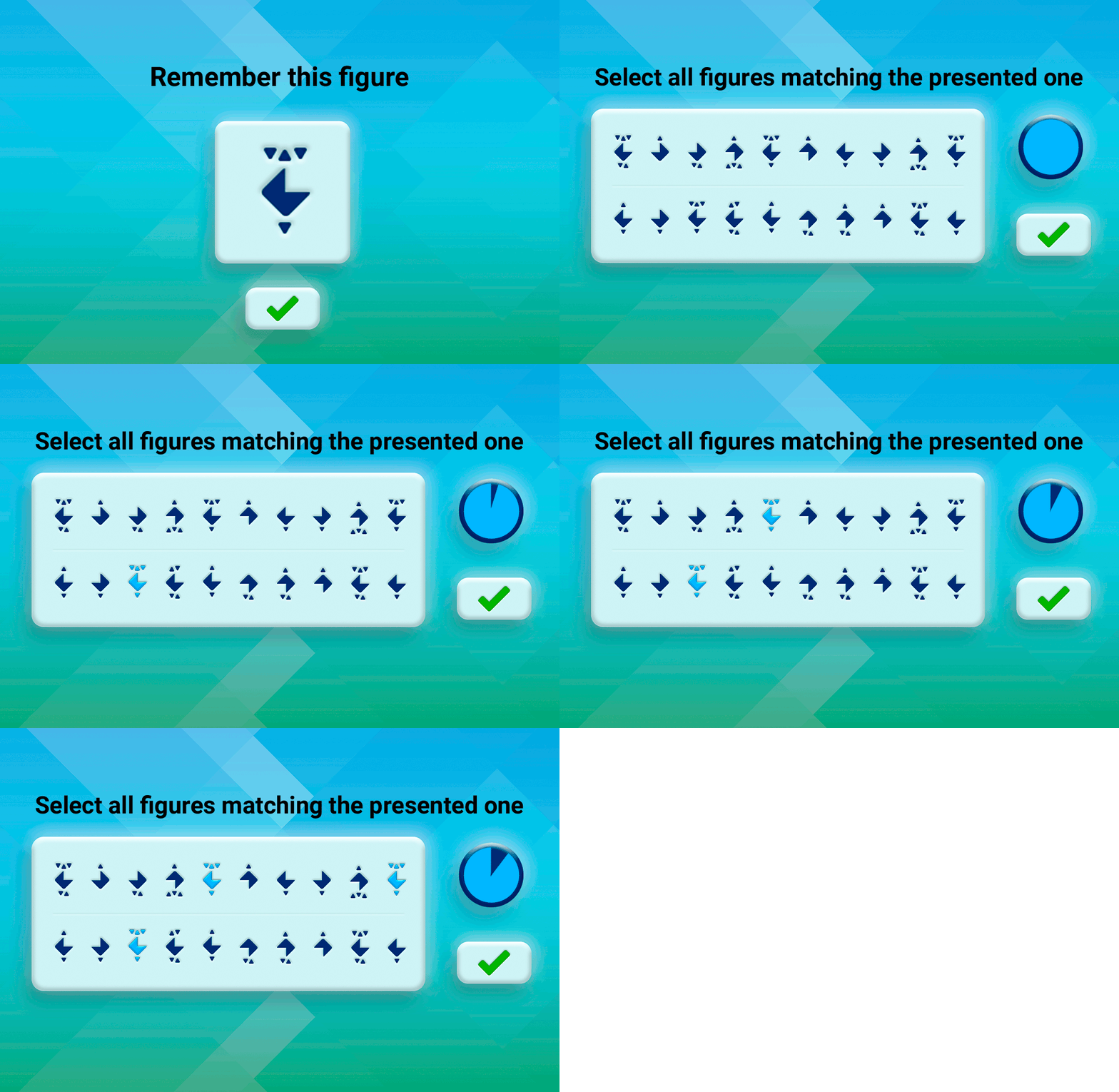
Selective attention task: a figure to remember, then a field of similar figures to choose from
Selective attention

Selective Attention Test

The ability to focus on relevant stimuli while ignoring distractions. Children with ADHD often struggle to filter out unimportant information.

In the task: remember a figure, then select every matching figure among similar ones.

Try the task
Psychomotor vigilance task: circles to tap as they appear and hexagons to ignore
Speed and consistency

Psychomotor Vigilance Test

The speed and consistency of reaction times. Slower and more variable reaction times can indicate difficulties with sustained attention and alertness.

In the task: tap the circles as they appear and ignore the hexagons.

Try the task
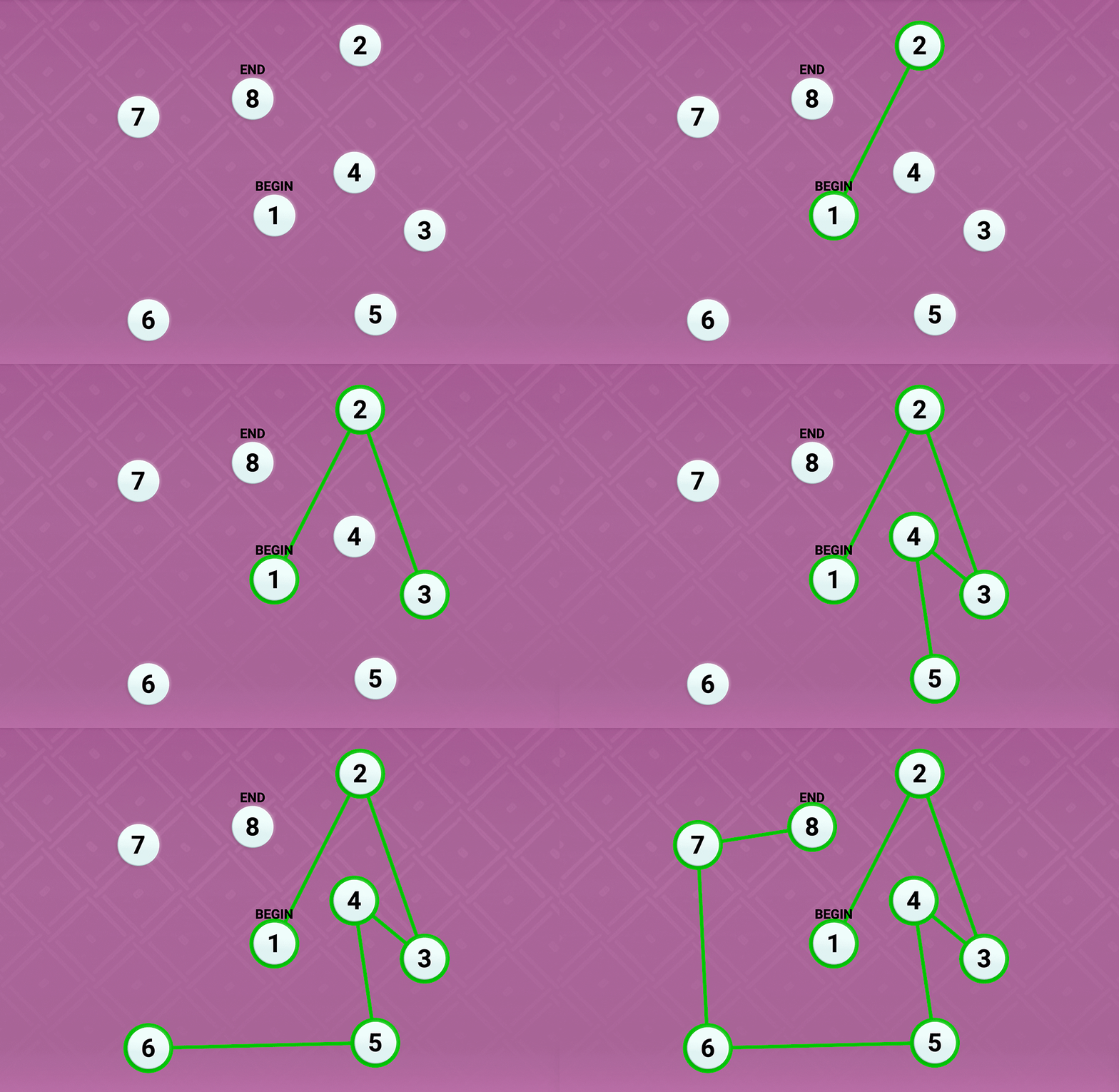
Trail making task: numbered circles to connect in order
Task switching

Trail Making Test

Visual attention and task switching: connecting a sequence of targets as fast as possible, sensitive to the shifting difficulties often seen in ADHD.

In the task: connect the numbered circles in order as fast as possible.

Try the task
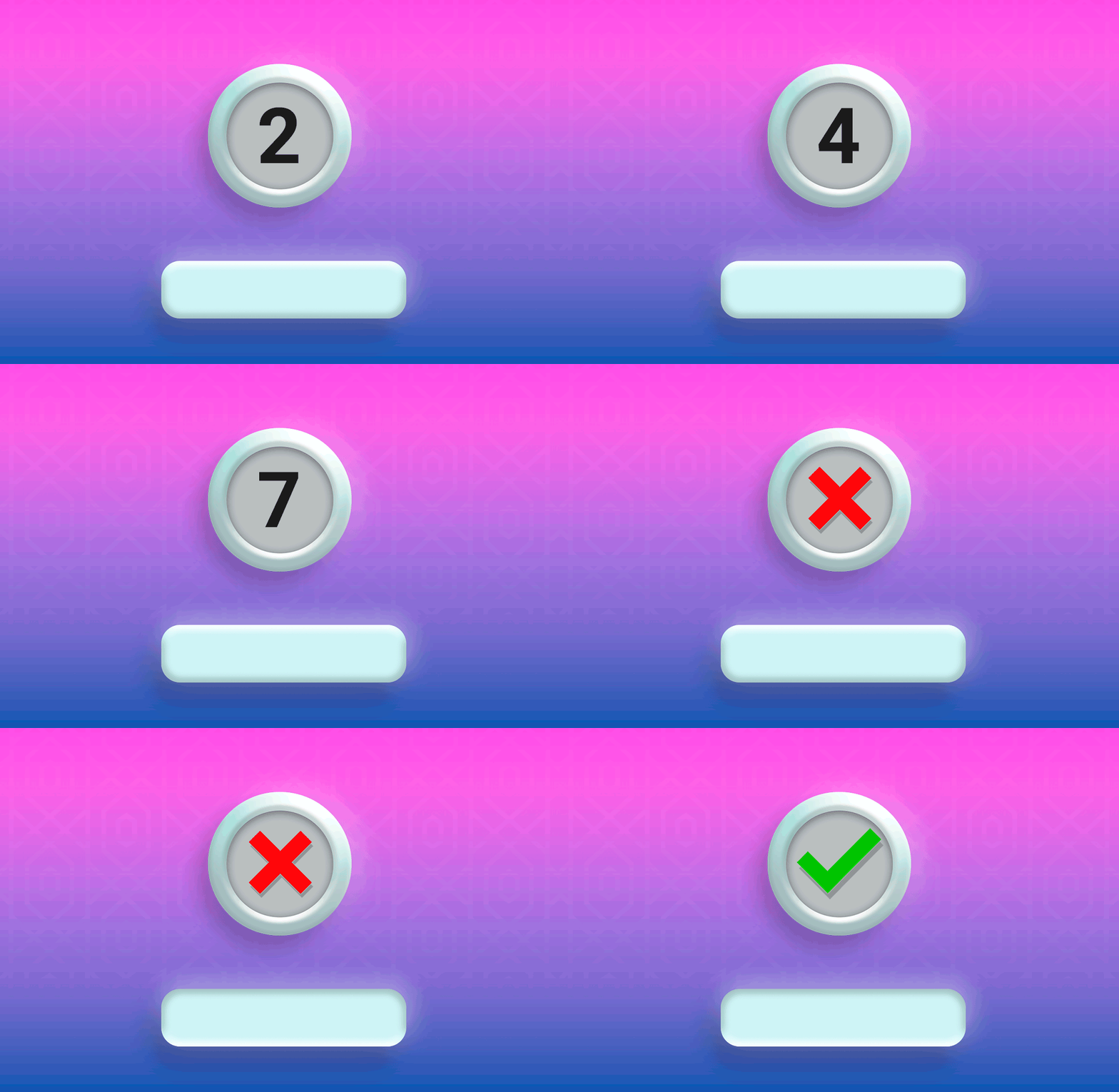
Sustained attention task: numbers appear one by one and the target number must be held back
Sustained attention

Sustained Attention to Response Test

The ability to keep a consistent response during continuous, repetitive activity. Deficits in sustained attention are a core characteristic of ADHD.

In the task: respond to every number as it appears and hold back on the target.

Try the task
CAB-ADHD stop-signal task: respond when a circle lights up and hold back when the stop signal appears
Response inhibition

Stop-Signal Test

The ability to withhold or stop an action. Impaired inhibitory control is a frequent symptom in children with ADHD and often leads to impulsivity.

In the task: respond to the go signal, and hold the response back when a stop signal follows.

Try the task
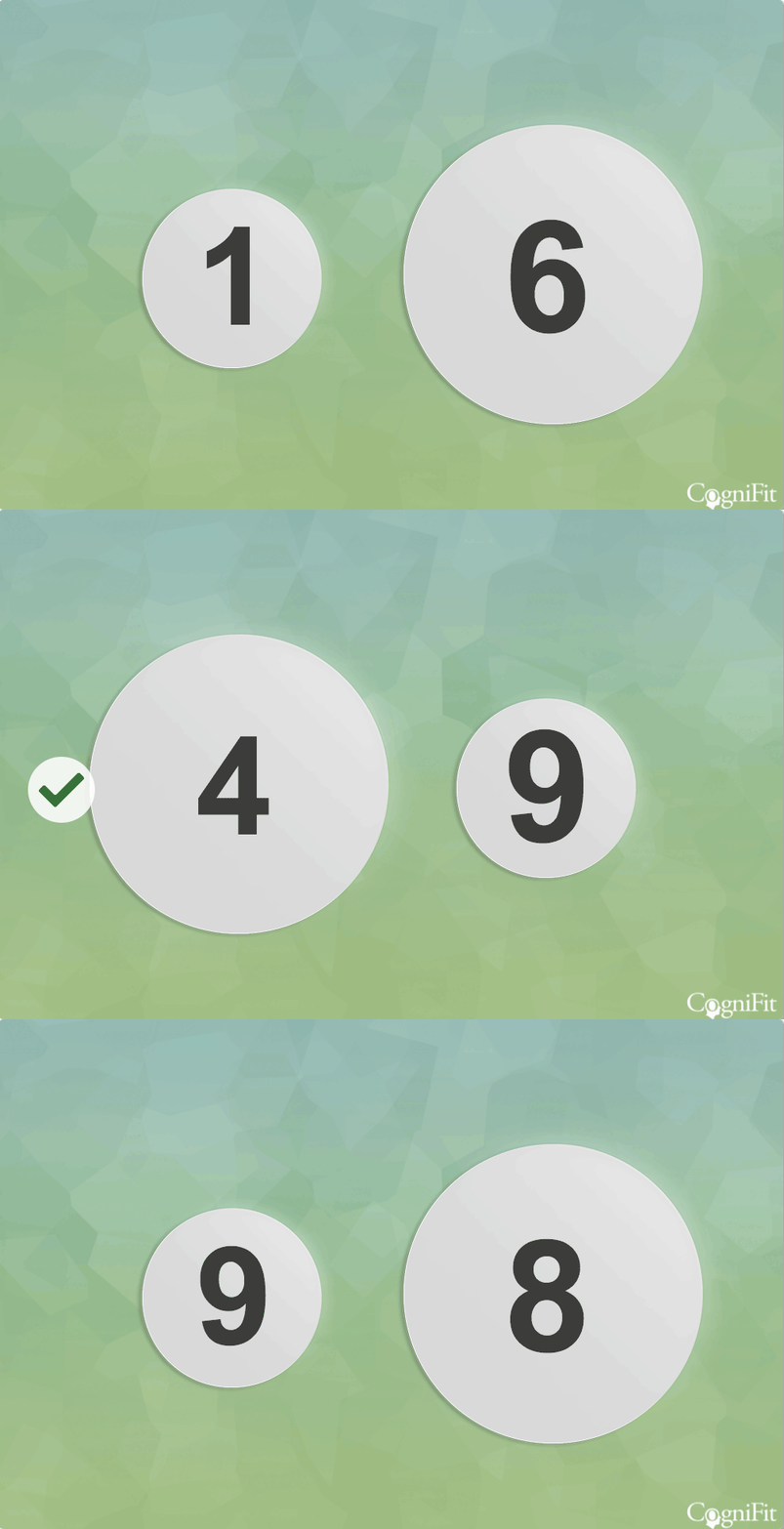
Number-size congruency task: two numbers of different print sizes, choose the higher one
Cognitive flexibility

Number-Size Congruency Test

Processing and responding to conflicting information. Children with ADHD may find it hard to adapt their thinking to changing rules.

In the task: choose the higher number, even when it is printed smaller.

Try the task

How the test works, from your account to the report

One questionnaire, six tasks and one report, online, in about 13–16 minutes for the child or teen.

  1. Create your account

    Open an account on the platform that fits your work: clinicians, researchers, schools or API partners.

  2. An adult answers the questionnaire

    An adult who knows the child answers 18 questions on the child's behavior over the past six months, based on the DSM-5 criteria: «YES» when it frequently applies, «NO» when it does not apply or only occasionally. Nine are inattention indicators and nine are hyperactivity and impulsivity indicators.

  3. The child completes six tasks

    Online, on a computer, tablet or phone. The whole test takes about 13–16 minutes.

  4. You receive the report

    The questionnaire's three scores with the child's answers, the Global Attention Index, each task's percentile score with what it measures, and a page for your comments, as a downloadable report.

  5. You interpret it in your evaluation

    The report is a snapshot useful in diagnostic and treatment-monitoring contexts, for the professional. It is never a diagnosis on its own.

Example report

Fictitious results
Questionnaire

Below 6 indicators in every domain.

Global Attention Index
79/ 100

Very high band (75–100)

Task scores (percentile, 0–100)
  • Selective Attention95
  • Psychomotor Vigilance90
  • Trail Making81
  • Sustained Attention to Response76
  • Stop-Signal66
  • Number-Size Congruency66

In the questionnaire, a domain is significant with 6 or more indicators out of 9, and the Combined Score applies when both domains reach 6 or more; in this example, no domain does. A lower Global Attention Index suggests greater difficulties with attention and executive functions.1

Bands: 0–24 very low · 25–34 low · 35–49 moderate · 50–64 good · 65–74 high · 75–100 very high.

Download the full example report (PDF)
Example with fictitious results. Source: CogniFit, example CAB-ADHD report for children.

Set up your account and see this report with the children and teens you assess.

Choose the platform that fits your work

The CAB-ADHD for children and teenagers is open to four kinds of professional account, each with its own tools. It is not a research-only product.

A neuropsychologist talks with a mother and her smiling daughter in a clinic office

Objective data for your clinical evaluation

Child psychologists, neuropsychologists, child psychiatrists, pediatricians and other health professionals add the questionnaire and tasks to their evaluation of a child or teen.

  • Questionnaire answered by an adult who knows the child
  • Six task percentiles and the Global Attention Index
  • A report with a page for your comments
A researcher explains a paper form to a mother and her teenage son at a table

Attention measures for your study

For studies that need to measure the attention and executive functions of child and adolescent participants, with the same tasks for every participant.

  • Percentiles against a normative dataset
  • A composite index from 0 to 100
  • Online on computer, tablet or phone
A school counselor kneels beside a girl and they look at a book together in a classroom

Objective data on how a student pays attention

School psychologists, counselors and teaching teams see how a student pays attention and use it to decide how to support them.

  • For children 7 and older and teenagers
  • About 13–16 minutes per student
  • Results as a downloadable report
Two product team members discuss paper sketches pinned on a wall in an office

CogniFit's assessment inside your product

Companies integrate the CAB-ADHD's questionnaire, behavioral tasks and results into their own product through CogniFit's API.

  • Questionnaire and six behavioral tasks
  • Task percentiles and the Global Attention Index
  • Runs on computer, tablet or phone

Is it for your child?

A family account gives your child access to the assessment; read the results with a qualified professional, who makes any diagnosis.

What the questionnaire, the tasks and the report rest on

The criteria behind the questionnaire, the reference behind the scores and the status of the tool, stated plainly.

The science

18

questionnaire items built on the DSM-5 diagnostic criteria for ADHD, nine for inattention and nine for hyperactivity and impulsivity.1

  • Each of the six tasks gives a percentile score from 0 to 100, relative to a normative dataset.
  • The Global Attention Index is a composite score derived from all the behavioral tasks.
  • The questionnaire gives an Inattention, a Hyperactivity-Impulsivity and a Combined Score.
See the sources behind this page

Status and use

A complementary tool for professionals. CogniFit does not offer a medical diagnosis of ADHD.

  • The questionnaire is not a diagnostic tool: it helps identify symptoms that may warrant a professional assessment.
  • The results are available as a downloadable report, for the professional.
  • The test is open to clinicians, researchers, schools and API partners.
Open the example CAB-ADHD report (PDF)

What the CAB-ADHD is, and what it is not

A measure that supports a professional's judgment, never a verdict on a child.

What the test does

  • Gathers an adult's report of the child's behavior, based on the DSM-5 criteria
  • Measures attention and executive functions with six online tasks
  • Compares performance with a normative dataset
  • Gives the professional a report for diagnostic and treatment-monitoring contexts

What it does not do

  • It does not diagnose ADHD
  • The questionnaire is not a diagnostic tool
  • It does not replace a comprehensive evaluation by a qualified health professional
  • It does not treat ADHD or promise any outcome

Questions about the ADHD test for children

Short answers for professionals and for the parents who arrive here.

Can an online ADHD test for children diagnose ADHD?

No. The CAB-ADHD is a complementary tool for professionals, and CogniFit does not offer a medical diagnosis of ADHD. A proper diagnosis should be made by a qualified health professional based on a comprehensive evaluation.

What is the CAB-ADHD for children?

The CAB-ADHD for children is CogniFit's Cognitive Assessment for ADHD for children and teenagers. It combines an ADHD symptom questionnaire based on the DSM-5 criteria, answered by an adult who knows the child, with six online behavioral tasks that measure attention and executive functions, and a downloadable report.

What ages is the test for, and how long does it take?

The test is for children 7 and older and teenagers. It takes about 13–16 minutes and runs online on a computer, tablet or phone.

Who answers the ADHD questionnaire, and how is it scored?

An adult who knows the child answers 18 YES/NO questions about the child's behavior over the past six months. It gives an Inattention Score, a Hyperactivity-Impulsivity Score and a Combined Score; a domain is significant with 6 or more indicators out of 9, as information for the professional's evaluation, not a diagnosis.1

What does the Global Attention Index mean?

The Global Attention Index is a composite score from 0 to 100 derived from all six tasks, an overall measure of the child's attentional control. A lower score suggests greater difficulties with attention and executive functions. Its bands are 0–24 very low, 25–34 low, 35–49 moderate, 50–64 good, 65–74 high and 75–100 very high.

I am a parent. What should I do if I recognize these signs in my child?

Talk to your child's pediatrician or another qualified health professional. Only a professional can diagnose ADHD through a comprehensive evaluation; the questionnaire helps identify symptoms that may warrant a professional assessment, and professionals can use the CAB-ADHD as part of it.

Which professionals can use the CAB-ADHD for children?

Clinicians, researchers, schools and API partners can use it, each through their own account. Clinicians include child psychologists, neuropsychologists, child psychiatrists and pediatricians; schools include school psychologists, counselors and teaching teams. Compare the four platforms.

Objective attention data for the children and teens you assess

Create the account for your work and add an adult-reported questionnaire, six online tasks and a report to your evaluation, in about 13–16 minutes.

Sources

  1. American Psychiatric Association (2013). Diagnostic and Statistical Manual of Mental Disorders, Fifth Edition (DSM-5).
  2. Felt, B. T., & Biermann, B. (2014). Diagnosis and Management of ADHD in Children. American Family Physician, 90(7), 456–464.
  3. CogniFit. Example CAB-ADHD report for children, illustrative example with fictitious results: https://static.cognifit.com/reports/adhd-child/en.pdf

Medical notice

This content is not medical advice and does not replace professional care. The CAB-ADHD is a complementary tool for professionals: CogniFit does not offer a medical diagnosis of ADHD, and the questionnaire is not a diagnostic tool.

A proper diagnosis of ADHD should be made by a qualified health professional based on a comprehensive evaluation. If you are a parent and recognize these signs in your child, talk to their pediatrician or another qualified health professional.

For adults, see the CAB-ADHD test for adults.

Please type your email address